10 Interview Questions to Prepare for in Australia
Practise 10 interview questions to prepare for Australian medical panels, with answering frameworks for specialty, college, hospital and university interviews.
You’re midway through an Australian medical interview. The panel has just heard why you chose medicine, and the next prompt introduces an ethical conflict involving consent, cultural safety or a deteriorating patient. A follow-up then asks you to defend your decision as though you’re in a clinical viva. The challenge isn’t knowing a perfect script. It’s shifting between motivation, judgement, communication and clinical reasoning while making your thinking easy to score.
Australian medical selection commonly combines academic performance, an aptitude test and an interview or portfolio component. For postgraduate entry through GEMSAS (the Graduate Entry Medical School Admissions System, the shared application service most graduate-entry medical schools use), one interview score can affect offers across multiple universities under the long-running “one interview policy”, so interview performance may matter beyond a single institution. The Australian Medical Students’ Association admissions documentation and GEMSAS materials describe a system in which interviews function as a high-stakes selection gate.
The most useful interview questions to prepare for are therefore organised by format, not memorised as isolated answers. The ten types below apply across medical school MMIs (multiple mini interviews, a circuit of short timed stations rather than one long panel), hospital panels, specialty selection interviews and college assessments. Whether your own process uses an interview at all, and who runs it, varies by college and by state — how specialty selection actually works in Australia sets out that map before you start rehearsing for the wrong format. For each, practise a clear response structure, identify the local context and rehearse aloud under the time pressure your pathway uses.
Table of Contents
- 1. Situational Judgment and Clinical Reasoning Questions
- 2. Motivation and Specialty Selection Questions
- 3. Ethical Dilemmas and Professional Integrity Questions
- 4. Teamwork and Collaboration Questions
- 5. Research and Scholarly Activity Questions
- 6. Communication and Presentation Skills Questions
- 7. Resilience, Stress Management and Wellbeing Questions
- 8. Knowledge Application and Viva-Style Questions
- 9. Empathy, Patient-Centredness and Diversity Questions
- 10. Self-Reflection and Learning from Experience Questions
- 10 Interview Question Types Comparison
- Turn Question Types into Panel Practice
1. Situational Judgment and Clinical Reasoning Questions
A clinical scenario may place you in a rural emergency department with limited support, ask you to manage an acute deterioration or require you to explain how you’d escalate a concern within a hospital network. The panel isn’t only checking whether you can name a diagnosis. It’s watching whether you recognise risk, prioritise immediate threats, seek help appropriately and communicate a safe plan.
Start with a concise safety statement. Clarify the patient’s immediate condition, call for senior assistance when appropriate, begin stabilisation and then gather focused information. Explain what you’d do in parallel rather than presenting a long list of disconnected investigations. If the scenario involves a referral, make your escalation pathway explicit and acknowledge that processes vary between jurisdictions and health services.
A useful response sequence is:
- Immediate assessment: State how you’d identify and address airway, breathing, circulation, disability and exposure concerns.
- Prioritisation: Explain which problem is most time-critical and why.
- Escalation: Identify the senior clinician, team or service you’d contact.
- Reassessment: Say what findings would change your plan.
Practical rule: A safe answer is stronger than an overconfident answer. Explain what you can do, what you’d verify and when you’d ask for help.
For specialty selection, revise the clinical guidance and published scoring domains relevant to your target college. For medical school interviews, use placement scenarios and practise explaining your reasoning to a non-specialist assessor. This clinical scenario question guide can help you turn broad presentations into repeatable reasoning structures.
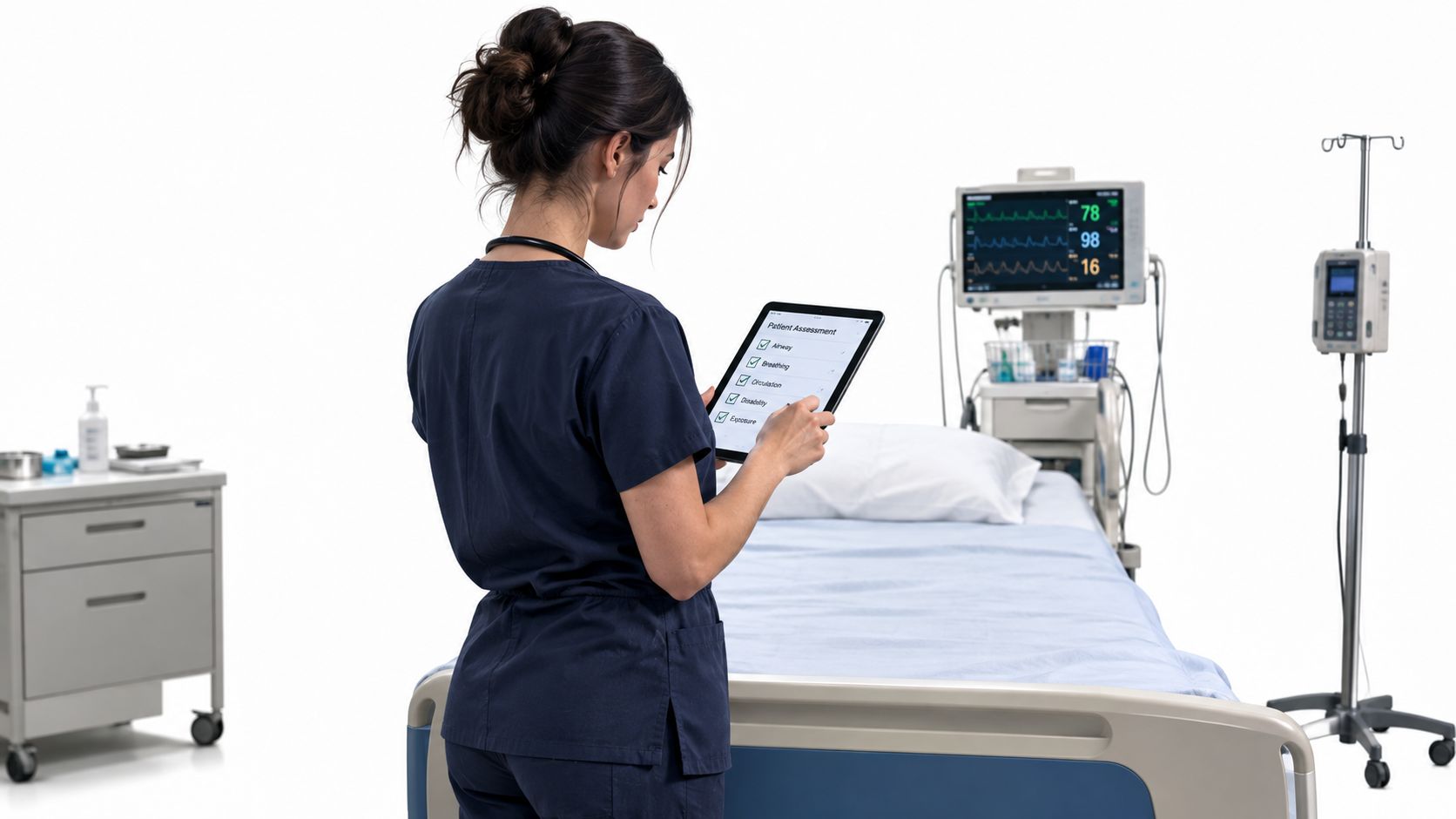
Practise aloud with a prompt such as: “A patient deteriorates overnight in a rural emergency department and the retrieval team is delayed. What do you do first, and how do you communicate with the patient’s family?” Include local escalation principles without pretending that every Australian service uses the same pathway.
2. Motivation and Specialty Selection Questions
“Why this specialty?” sounds straightforward, but generic enthusiasm rarely distinguishes an applicant. A panel wants to hear a credible connection between your experiences, the work itself and the demands of training. Saying that you enjoy helping people or that the specialty is intellectually challenging gives the assessor little evidence about your fit.
Build your answer around three or four genuine themes, each supported by a specific experience. You might discuss exposure during a rotation, a research project, mentorship, the patient population or the balance between acute decision-making and longitudinal care. Then show that you understand the less attractive parts of the job. Emergency medicine, surgery, physician training and rural practice each carry different clinical, roster and lifestyle demands, and your answer should acknowledge those realities.
Avoid turning the response into a biography. Use this structure:
- Trigger: What first introduced you to the specialty?
- Evidence: What did you observe, do or learn?
- Fit: Which capabilities and values align with the work?
- Direction: What do you want to develop during training?
A panel from the RACP (Royal Australasian College of Physicians, which runs physician training) or RACS (Royal Australasian College of Surgeons, which runs surgical training) may also test whether your motivation survives a follow-up such as, “What would make you reconsider?” Prepare to explain how your interests developed rather than presenting a fixed identity.
The Australian MMI practice questions resource is useful for converting personal experiences into concise answers without memorising a speech. Record yourself answering “Why this specialty, and why now?” Then remove claims that aren’t supported by an example.
3. Ethical Dilemmas and Professional Integrity Questions
Ethical scenarios often contain competing duties rather than a single obvious answer. You might need to protect confidentiality in a small community, respond to a consent dispute, manage a conflict of interest or discuss end-of-life care with a family whose cultural or religious preferences differ from your own.
Begin by identifying the patient’s immediate welfare and decision-making capacity. Clarify the facts before judging the people involved. Then name the competing principles, such as autonomy, beneficence, non-maleficence and justice, and explain how you’d balance them. A strong answer also shows that you understand your limits. You may need a senior clinician, cultural liaison officer, interpreter, ethics service or legal advice.
Australian candidates should know the professional expectations that shape these situations. Review the Good Medical Practice code published by the Medical Board of Australia and administered through AHPRA (the Australian Health Practitioner Regulation Agency, the national registration and regulation body), your college’s ethical documents and the relevant health-law principles for your state or territory. Don’t quote policy mechanically. Apply it to the facts in front of you.
For an Aboriginal or Torres Strait Islander health scenario, avoid treating culture as a checklist. Ask how the patient wants decisions handled, offer appropriate support and recognise the effects of power, history and access on trust. For confidentiality in a rural setting, acknowledge that limited anonymity creates practical challenges, but it doesn’t remove the patient’s rights.
Practise responding to: “A competent adult refuses a treatment you believe is necessary. How would you proceed?” State what you’d clarify, how you’d assess capacity, how you’d communicate risk and when you’d escalate.
4. Teamwork and Collaboration Questions
A junior doctor rarely controls the whole clinical environment. You’ll need to communicate with nurses, allied health professionals, pharmacists, administrators, senior doctors, patients and families, sometimes while a team member disagrees with your plan. Panels assess whether you can contribute without dominating, challenge unsafe decisions respectfully and accept feedback without becoming defensive.
Use a real example rather than describing yourself as a “team player”. Explain the clinical or operational context, your role, the disagreement or pressure point, the action you took and what changed afterwards. Give other professionals proper credit. If the outcome wasn’t ideal, say what you’d do differently.
A useful scenario is a disagreement with a senior colleague about a deteriorating patient. A safe response should include:
- Clarifying the concern: Use objective observations and avoid accusatory language.
- Speaking up: State the risk clearly and recommend a specific next step.
- Escalating: Follow the local chain of command if the concern remains unresolved.
- Closing the loop: Confirm the plan and document or hand over appropriately.
The panel may be listening for whether you understand hierarchy without treating it as a reason to stay silent. They’ll also notice whether you describe nursing and allied health colleagues as partners in care or as people who carry out medical instructions.

Prepare examples involving feedback, conflict and supporting a colleague. A prompt such as “Tell us about a time you changed your approach after another professional raised a concern” often reveals more than a broad question about leadership.
5. Research and Scholarly Activity Questions
Research questions don’t require every applicant to have a publication record. They test whether you can ask a useful question, assess evidence, learn from uncertainty and translate knowledge into safer practice. Quality improvement, teaching, audit and service evaluation can all provide strong material when you explain your contribution accurately.
Describe one project in plain language. State the question, the setting, your role, the method, the main finding and what happened next. Don’t claim ownership of work performed by a larger team. If the project had limitations, identify them and explain how they affect interpretation.
For example, an audit may show inconsistent adherence to a clinical guideline. Your answer should go beyond “we presented the results”. Explain how you identified the gap, involved the relevant staff, considered possible causes and decided whether a change was practical. If you’re discussing laboratory or clinical research, make the implication understandable to an assessor outside your exact field.
Specialty panels may ask how scholarly activity fits your career. Connect the project to a clinical problem rather than forcing a grand career narrative. You can say that the experience taught you how difficult implementation is, improved your understanding of bias or made you more interested in a particular patient group.
Practise answering: “Explain your project to a patient who asks why it matters.” If you can’t describe the value without jargon, you probably haven’t reduced the project to its essential idea yet. Follow with: “What would you change if you repeated it?” That second question tests reflection, not recall.
6. Communication and Presentation Skills Questions
Communication is assessed even when the panel isn’t asking about communication. A technically sound answer can lose clarity through jargon, excessive detail, a rushed pace or an unclear conclusion. Medical school MMIs and hospital panels often give you limited time, so assessors need to identify your reasoning quickly.
When asked to explain a clinical concept, first identify the audience’s baseline knowledge. Use ordinary language, short sections and a signposted structure. For a patient, explain what you know, what you don’t know, what the next step is and what symptoms require urgent attention. For a clinical team, focus on the decision, evidence and action required.
A simple structure is:
- Headline: State the main message.
- Explanation: Give the relevant detail in a logical order.
- Check: Invite questions or confirm understanding.
In an advocacy question, distinguish persuasion from pressure. Explain the patient or service need, acknowledge constraints and propose a workable next step. A panel may prefer a candidate who can negotiate and listen over one who delivers a polished but one-sided speech.
Use this medical interview preparation guide to practise format-specific answers. Record a two-minute explanation of haemodynamic instability, then listen for filler words, unexplained abbreviations and sentences that contain several ideas. Ask a colleague to summarise your main point. If they can’t, restructure it.
7. Resilience, Stress Management and Wellbeing Questions
A panel isn’t looking for evidence that you never struggle. That answer usually sounds unrealistic and can suggest poor self-awareness. The stronger response explains how you recognise pressure, protect performance, use support and learn after a difficult event.
Choose examples that are real but appropriate for an interview. You might discuss a demanding rotation, a difficult patient outcome, an academic setback or competing responsibilities. Describe the early signs that your coping was being tested, the practical steps you took and the people or services you involved. If a clinical error forms part of the example, focus on patient safety, disclosure through the correct channels, supervision and changed practice.
Your coping plan should include more than “I work harder”. Sustainable strategies might involve sleep, exercise, family, hobbies, peer support, supervision or professional services. The point isn’t to present a perfect lifestyle. It’s to show that you understand performance depends on recognising limits and asking for assistance before risk escalates.
“A safe clinician doesn’t treat help-seeking as failure. They treat it as part of responsible practice.”
Training demands differ between specialties, hospitals and rosters. Research the support structures available through your intended employer, university or college, but don’t imply that wellbeing is solely an individual responsibility. A good answer can acknowledge workload, team culture and the need for systems that support safe care.
Practise: “Tell us about a setback and what you changed afterwards.” Keep the event specific. Finish with a behaviour you now use, not a broad statement that you became more resilient.

8. Knowledge Application and Viva-Style Questions
Viva questions reward reasoning under direction. The assessor may ask what you think is happening, interrupt with a new result, challenge your investigation choice or require you to defend management. This differs from a behavioural panel question because the conversation can move rapidly from diagnosis to pathophysiology, risk and treatment.
Answer in layers. Start with your leading concern and immediate priorities. Explain the information that supports your assessment, then identify alternatives and the findings that would distinguish them. When proposing an investigation, say what decision it will change. When recommending treatment, include contraindications, monitoring and escalation.
For a case involving acute coronary syndrome, for example, don’t recite a memorised algorithm without addressing the patient’s stability, timing, comorbidities and local protocols. For a surgical scenario, explain why an operative approach fits the patient and situation, while acknowledging when another approach would be safer. College curricula and current Australian guidance should anchor your revision, but your answer must still respond to the facts supplied.
Practise with a partner who interrupts. Ask them to change one variable, such as renal function, pregnancy status, allergy history or available resources. Then verbalise how the change affects your plan.
A strong viva answer sounds like clinical thinking:
- Working assessment: What concerns you most?
- Evidence: Which findings support it?
- Next decision: What will you do now?
- Contingency: What would make you change course?
Don’t bluff. If you’re uncertain, state the uncertainty, identify the immediate safety action and explain where you’d verify the detail.
9. Empathy, Patient-Centredness and Diversity Questions
These questions test whether you can treat the person in front of you as more than a diagnosis. A patient may have different priorities, limited English, a disability, a history of discrimination, cultural obligations or a treatment preference that conflicts with your recommendation. The panel wants to hear curiosity, respect and safe clinical judgement.
Start by asking what matters to the patient and what they understand already. Don’t assume that a cultural identity predicts an individual preference. Use a qualified interpreter when language support is needed, and involve Aboriginal and Torres Strait Islander health professionals or liaison services where appropriate. Explain options, benefits and risks in a way the patient can understand, then support a voluntary decision.
If the patient chooses differently from your recommendation, distinguish disagreement from incapacity. Explore the reason, correct misunderstandings and assess whether the person can make the decision. If the choice remains informed and lawful, explain how you’d respect it while managing ongoing risk. If capacity or immediate safety is uncertain, seek senior support.
A useful prompt is: “An Aboriginal patient declines a recommended investigation after a previous negative hospital experience. What do you do?” Avoid jumping straight to persuasion. Build trust, ask about the prior experience, offer culturally safe support, explain the purpose of the investigation and check whether the patient wants someone involved in the discussion.
Panels also value self-awareness. If you haven’t worked with a particular community, say so without making the patient responsible for your education. Explain how you’d seek guidance, reflect on assumptions and adapt your approach.
10. Self-Reflection and Learning from Experience Questions
Reflection questions often begin with “Tell us about a time you received difficult feedback” or “What have you learned from a mistake?” The assessor isn’t expecting a flawless record. They’re assessing whether you can take responsibility, identify a precise lesson and change your behaviour.
Choose an example with a clear before-and-after. Briefly describe the setting, what happened, how you contributed and what feedback or evidence exposed the gap. Then explain the change you made. “I became more confident” is weak unless you show what you now do differently, such as preparing a structured handover, confirming understanding or seeking earlier supervision.
Keep the focus on your learning, not on blaming a supervisor, patient or system. You can acknowledge system factors while still identifying your own responsibilities. If the event involved patient safety, explain how you followed reporting and escalation processes rather than presenting private problem-solving as a virtue.
Try this reflection sequence:
- Event: What happened?
- Interpretation: Why did it matter?
- Responsibility: What was within your control?
- Change: What behaviour or knowledge did you alter?
- Continuation: What are you still working on?
The final step matters. Mature candidates can name an ongoing development area without undermining their suitability. A medical student might describe improving clinical presentations. A junior doctor might discuss prioritisation or speaking up. A trainee might explain how feedback changed their approach to supervision.
Practise answering: “What would your last supervisor say you should improve?” Give a specific answer and a credible plan. Don’t convert a strength into a disguised weakness.
10 Interview Question Types Comparison
| Question type | What the assessor is scoring | Where it usually appears | How to prepare |
|---|---|---|---|
| Situational judgement and clinical reasoning | Prioritisation, escalation, safe action under uncertainty | Selection interviews and clinical stations | Rehearse an assessment-to-escalation sequence; learn your own state’s referral routes |
| Motivation and specialty selection | Specific, informed, durable reasons for the pathway | Panels assessing fit and commitment | Prepare three to five reasons, each tied to a real experience |
| Ethical dilemmas and professional integrity | Identifying competing duties and reasoning between them | Stations on confidentiality, consent, end-of-life care | Work from principles to the specific facts; know your jurisdiction’s limits |
| Teamwork and collaboration | Contribution, respectful challenge, response to feedback | Multidisciplinary and safety-culture stations | Prepare two or three genuine examples with a clear role and outcome |
| Research and scholarly activity | Understanding of evidence, limitations and your actual contribution | Competitive and academic-track selection | Be able to explain one project in plain language, including what went wrong |
| Communication and presentation | Clarity, structure, checking understanding | Patient-facing and counselling stations | Practise aloud; cut jargon and unexplained abbreviations |
| Resilience, stress management and wellbeing | Self-awareness, help-seeking, realistic expectations | Stations on sustainability of training | Describe concrete coping strategies and the support you actually used |
| Knowledge application and viva-style | Depth of reasoning when the case changes mid-answer | College examinations and viva-style interviews | Practise with a partner who interrupts and alters one variable |
| Empathy, patient-centredness and diversity | Curiosity, respect, safe judgement without assumption | Cultural safety and shared decision-making stations | Use authentic examples; never treat culture as a checklist |
| Self-reflection and learning from experience | Responsibility, a precise lesson, changed behaviour | Portfolio and reflective stations | Structure as event, responsibility, change, and what you are still working on |
The table describes what each question type is for. It deliberately carries no effectiveness scores: the published evidence comparing selection instruments is mixed, and a star rating invented for a blog table would tell you nothing about the panel you are actually sitting in front of.
Turn Question Types into Panel Practice
The ten categories become useful only when you practise them in the format you’re likely to face. An MMI station rewards concise, independent reasoning under a defined time limit. A hospital panel may allow a longer narrative and probe your employment history, judgement or suitability for a particular service. A specialty-selection interview may focus on published domains, motivation, teamwork and evidence of commitment. A college viva tests clinical knowledge, prioritisation and your ability to defend decisions as the examiner changes the case.
Australian medical-school interviews have used highly structured MMI formats. For the 2026 intake, Melbourne Medical School’s published MD selection guidelines describe an eight-station MMI, with five minutes per station and a single interviewer at each, assessing non-academic qualities including cultural sensitivity, maturity, collaboration, reliability and communication in its selection documentation. The same guidelines require candidates to score above the cut-score in five of the eight stations to be eligible for an offer, so a single strong station cannot rescue a weak overall performance. That format explains why a long, beautifully developed answer can still underperform. You need to identify the task, structure your reasoning and demonstrate the assessed quality before the station ends.
Check the current version of that document before you rely on it. Melbourne’s selection guidelines are a controlled document that is revised between intakes, and the station count, timing and cut-score rules are exactly the details that move.
Specialty preparation requires the same discipline. Interview weighting and assessment methods vary across colleges, jurisdictions and pathways, and the spread is wide. In cardiothoracic surgery, a semi-structured interview has been published as carrying 60% of the selection score, alongside a structured curriculum vitae and procedural logbook at 20% and unit-based competency assessment at 20% as summarised in Avant’s specialty training program guides. Other surgical pathways weight their components differently or publish no percentage split at all. Avant is an indemnity insurer summarising college processes rather than the college itself, so treat the current selection regulations published by your own college, for your exact intake year, as the source of truth.
Use this practice cycle:
- Select one prompt: Choose one question from each category across a week.
- Name the format: Mark it as MMI, specialty selection, hospital panel or college viva.
- Set the response shape: Use a concise framework, not a memorised script.
- Add local context: Include the relevant state, hospital network, college, university or Australian health-system issue.
- Review the recording: Check structure, timing, clinical safety, communication and reflection.
- Repeat with variation: Change the patient, team, setting or follow-up so you practise transfer rather than recall.
For MMI work, prepare station-by-station. Australian interview guidance recommends strict timing, repeated spoken practice and familiarity with topics such as Medicare, the Australian health system, AHPRA, Good Medical Practice and state-specific policy issues in this University of Tasmania interview preparation resource. For specialty selection, map every published scoring domain to at least one genuine example. For a viva, ask a partner to interrupt and introduce new clinical information.
The trade-off is clear. Large volumes of generic questions can make you feel busy, but they can also encourage scripted answers that collapse when the panel changes one detail. A smaller bank of genuine experiences, rehearsed across different prompts and timed in the local format, gives you more adaptable evidence. Spend your preparation time on the work an assessor can observe, clear reasoning, safe escalation, precise communication, reflection and the ability to respond to the question that was asked.
CliniRoo is building Australian-focused interview banks for medical school MMIs, specialty selection pathways and college assessments, with format notes, station intent and annotated model answers. Nothing is on sale yet. If you want to be told when there is something to use, CliniRoo takes an email address and does nothing else with it.